Meet Amanda Ferreira: the designer who trusted the work she actually enjoyed
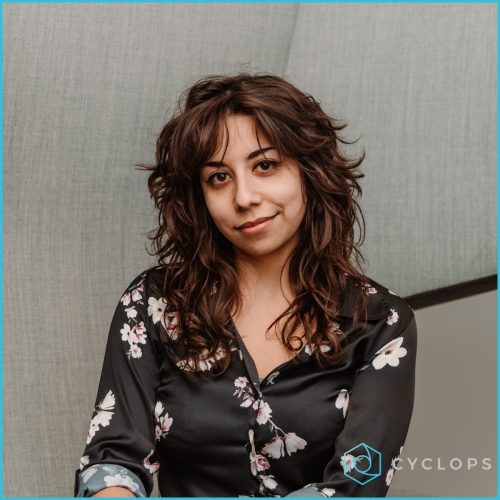
New faces at Cyclops, this time a returning one. A chemical engineer who spent six years at Cyclops, spent a while trying a different kind of engineering work, and came back to the part she likes most.
Amanda Ferreira rejoined Cyclops as a CAD designer a few months ago. She was here for six years before that, from October 2019, and spent the last stretch of it splitting her time between design and project engineering. The time away is what settled which of the two she wanted.
2019: arriving quiet
Amanda came to Belgium from Brazil in May 2019, freshly graduated in chemical engineering. During her studies she had worked as a drafting instructor, become fluent in CAD, and found she liked working with P&IDs, so that’s what she searched for. A Cyclops opening for a CAD designer came up and she jumped on the occasion.
“My colleagues who met me around that time will very gladly remark how quiet I was for the first six months.”
Part of that was the job. Drafting supports a lot of projects at once, so she was hopping from one to the next with a great deal of information arriving at speed. Part of it was the vocabulary.
“The technical part was fine, you can use these softwares for ten years and still learn something new. The part where I was most lost was the project language.”
What closed the gap was the internal training. Cyclops runs sessions every month, and for a designer sitting beside the project conversation rather than in it, they were the place the vocabulary finally made sense. “That helped me a lot in the beginning to understand: ah okay, scope is this, this is what they mean when they are talking about scope here and there.”
“Now I can step onto a project, hear the PMs throwing the language left and right, and I already know what they’re talking about.”
Trying the other job
Working next to project engineers for years made her curious about the job itself, so she asked to be put on projects as a PE. Her last two and a half years were roughly half design, half project engineering.
She rates the work highly and says she learned a great deal from it. Her favourite project of the six years came out of that period: a start-up chemically recycling polyurethane, which happened to be the subject of her own university thesis. “What we wanted to do was not something that existed, so we needed to figure out how.”
Two years in the project engineering seat gave her something useful: a clear read on which kind of work she’s drawn to. She rates what she learned there highly: “I learned a lot, a lot”. And she also came away certain that design is where she does her best work.
It’s a question of temperament. Design is execution: the task is hers from start to finish, and she gets to see it land. Project engineering is planning and coordinating for a whole team. Both are demanding, both are needed on every project, and having now done each of them properly, she knows which one she wants to be doing.
The year away
She spent a period working elsewhere, which turned out to be a useful way to answer a question she had been carrying for a while: which part of the work was really hers.
The answer came from looking back across six years of tasks and noticing that the ones she had enjoyed most were consistently the same. “In the end, the work I liked the most doing was the CAD designing work. I like working with software. I like working with 3D.”
Which is how she ended up back at Cyclops, doing exactly that.
“You can choose jobs, you can screen for a bunch of things, but you can’t really screen for your colleagues. You have to be lucky, and in this case I think I’m lucky.”
What she’d tell someone starting tomorrow
“Don’t be afraid to ask questions. Especially with project management, there’s a lot of terms being thrown around, and sometimes you feel lost. That’s why I was quiet in the beginning, I thought I should know these things. Actually, no. You learn them from working.”
She’s also seen the onboarding from both ends, and says it has come a long way since 2019, something she noticed on her return. Her point is that the two work together: the onboarding gives you the map, and the job fills it in. “You learn by doing, and while you’re doing, the questions come.”
Why this matters to us
Two things in Amanda’s story are worth keeping.
The first is that the two and a half years of half design, half project engineering told her something she could not have learned any other way. That is a good reason to let people try the adjacent job, and it stays a good reason when the conclusion is not for me. Her answer was specific and well-argued, which is more than most people can say about work they have never tested.
The second is what she names as the reason she came back: the work she wanted to be doing, and the colleagues she wanted to do it with. Both are things we’d like to keep deserving: the design work worth coming back to, and a team that people are glad to rejoin. And we’re happy that the door works in both directions. Someone who leaves, learns something elsewhere and returns brings more back than they took with them.
Welcome back, Amanda.